
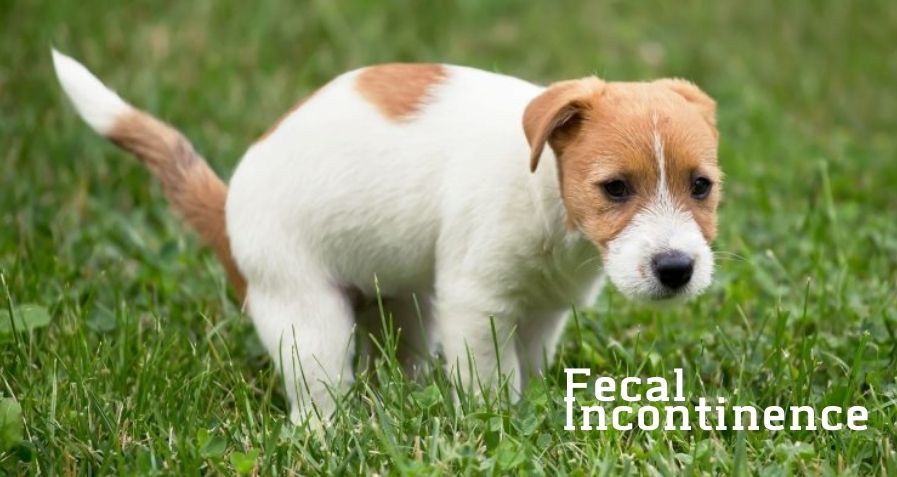
Fecal Incontinence
Issues
Fecal Incontinence
The inability to retain feces, resulting in involuntary passage of fecal material.
PATHOPHYSIOLOGY
- Reservoir fecal incontinence develops when disease processes reduce the capacity or compliance of the rectum.
- Sphincter incontinence develops when the external anal sphincter is anatomically disrupted (i.e., non-neurogenic sphincter incontinence) or denervated (i.e., neurogenic sphincter incontinence).
- Neurogenic sphincter incontinence can be caused by pudendal nerve damage, sacral spinal cord disease, autonomic dysfunction, and generalized peripheral neuropathy or myopathy.
- Damage to, or degeneration of, the levator ani and coccygeus muscles may also contribute.
SYSTEMS AFFECTED
- Gastrointestinal
- Nervous
GENETICS
No known genetic basis for development of any types of incontinence—reservoir, sphincter or neurogenic.
SIGNALMENT
Dog and cat.
Although any age animal may be affected, incidence increases in older patients.
SIGNS
Historical Findings
- Reservoir incontinence—promotes an urge to defecate; signs include frequent, conscious defecation without dribbling of feces; defecation may be associated with tenesmus, dyschezia, or hematochezia.
- Sphincter incontinence—associated with involuntary expulsion or dribbling of fecal material, especially during excitement or barking and coughing.
- Question clients about previous neurologic disease, anorectal surgery and/or trauma, house training, deworming, and whether the pet seems to defecate voluntarily or involuntarily; also obtain information regarding the pet’s diet, current medications, and concurrent systemic clinical signs, especially neurologic signs.
- Concurrent urinary incontinence suggests neurogenic sphincter incontinence.
Physical Examination Findings
- Reservoir incontinence—may include anorectal sensitivity or pain on digital palpation, a rectal mass or thickening of the rectal mucosa; external anal sphincter tone and non-neurogenic sphincter incontinence anal reflex are normal.
- Non-neurogenic sphincter incontinence—may include evidence of perineal trauma or perianal fistulas; the anal reflex is present, but the external anal sphincter may not completely close if the sphincter has been anatomically disrupted.
- Neurogenic sphincter incontinence—may include loss of tone to the external anal sphincter, but anal tone is a poor indicator of anal sphincter function; the anal reflex is absent or diminished.
- Do a complete neurologic examination on all animals with sphincter incontinence; additional findings suggesting lumbosacral spinal cord disease include loss of voluntary movement and tone to the tail, lumbosacral pain, flaccid posterior paresis or paralysis, and hyporeflexic myotatic reflexes to the pelvic limbs.
- Diffuse lower motor neuron signs suggest generalized peripheral neuropathy or myopathy; upper motor neuron signs to the pelvic limbs suggest CNS disease cranial to the lumbosacral plexus.
CAUSES
Reservoir Incontinence
- Colorectal disease—colitis, irritable bowel syndrome, and neoplasia.
- Diarrhea—large volumes of feces from any cause can overwhelm the absorptive and storage capacity of the colon.
Non-neurogenic Sphincter Incontinence
- Traumatic anal injuries—bite wounds, severely abscessed anal sacs, laceration, or gunshot.
- Iatrogenic—the external anal sphincter and levator ani muscles can be anatomically disrupted during anorectal surgery.
- Perianal fistulas.
Neurogenic Sphincter Incontinence
- CNS—degenerative myelopathy, spinal dysraphism, spina bifida, trauma, intervertebral disc extrusion, neoplasia, meningomyelitis (various causes), fibrocartilaginous embolism, other vascular compromises.
- Cauda equina syndrome—L6–L7 or L7–S1 intervertebral disc extrusion, spondylosis deformans, congenital spinal canal stenosis, lumbosacral instability, discospondylitis, and neoplasia.
- Peripheral neuropathy—infectious, immune-mediated, drug-induced (e.g., vincristine sulfate), dysautonomia, and idiopathic.
- Myopathy/neuromuscular disorder.
- Degeneration (aging)—multiple factors are likely involved, including atrophy of the muscles involved in fecal continence, weakness, degenerative neuropathy, and senility.
RISK FACTORS
- Colonic disease
- Anorectal disease and surgery
- CNS disease and peripheral neuropathy
DIAGNOSIS
DIFFERENTIAL DIAGNOSIS
- Gastrointestinal disease from any cause can increase the urge to defecate without directly altering the reservoir capacity of the colon.
- Unlike sphincter incontinence, gastrointestinal disease is often associated with weight loss, vomiting, tenesmus, dyschezia, and hematochezia.
- Behavior disorders (e.g., separation anxiety), unlike fecal incontinence, are often associated with destructive activities or excessive vocalization.
- Inadequate house training usually occurs in young dogs or dogs recently introduced to an indoor environment or in cats with litter box aversion (not enough boxes, soiled box, poor location, new litter, etc).
CBC/BIOCHEMISTRY/URINALYSIS
Results usually unremarkable.
Urinalysis may show evidence of lower urinary tract infection (e.g., pyuria, hematuria), especially with concurrent urinary incontinence.
OTHER LABORATORY TESTS
Perform fecal flotation to help rule out parasitism as a cause of diarrhea.
A rectal scraping is indicated in regions where histoplasmosis or pythiosis are endemic.
IMAGING
- Lateral and ventrodorsal survey radiography of the lumbosacral spine may show evidence of intervertebral disc extrusion, discospondylitis, vertebral neoplasia, spina bifida, lumbosacral trauma, or vertebral malformation.
- Myelography and epidurography are also useful in demonstrating compressive lesions within the spinal canal.
- CT and MRI may be necessary to demonstrate some compressive lesions and intraparenchymal spinal cord lesions.
OTHER DIAGNOSTIC PROCEDURES
- Electromyography to evaluate external anal sphincter, levator ani, and coccygeus muscles for evidence of denervation or myopathy.
- Evaluation of other muscles recommended to help localize the neurologic lesion—diffuse denervation vs. focal spinal cord lesion.
- Can evaluate the pudendal-anal reflex electrophysiologically.
- Muscle and nerve biopsy for myopathy and peripheral neuropathy.
- Analysis of cerebrospinal fluid collected by lumbar puncture may reveal evidence of a CNS infectious or inflammatory process, neoplasia, or trauma.
- Perform colonoscopy and colorectal mucosal biopsy if reservoir incontinence is suspected.
TREATMENT
- If possible, identify the underlying cause; fecal incontinence may resolve if the underlying cause is successfully treated (e.g., spinal cord decompression, colitis, etc.).
- Dietary—fecal volume can be reduced by feeding low-residue commercial diets or foods such as cottage cheese and rice and/or tofu. Feed pet at established times to better control times needed to defecate. Increasing fecal volume with high insoluble fiber diets is contraindicated.
- Frequent warm water enemas will diminish the volume of feces in the colon and thus decrease the incidence of inappropriate defecation.
- Environmental changes (e.g., making the pet an outside pet) may increase client satisfaction and thus avoid euthanasia of an otherwise healthy animal.
- Reflex defecation can sometimes be induced in animals with posterior paralysis (e.g., a mild pinch of the toe on a pelvic limb or tail); similarly, applying a warm washcloth to the anus or perineum may stimulate defecation.
- Surgical reconstruction of anorectal lesions may markedly improve fecal continence in patients with non-neurogenic sphincter incontinence.
- Fascial slings and silicone elastomer slings have met with variable success in treating neurogenic sphincter incontinence in dogs.
- Prognosis is poor if the underlying cause cannot be identified and successfully corrected; discuss the prognosis with the client early in the evaluation to avoid unrealistic expectations.
MEDICATIONS
DRUG(S) OF CHOICE
Opiate motility-modifying drugs (e.g., diphenoxylate hydrochloride and loperamide hydrochloride) increase segmental contraction of the bowel and slow passage of fecal material, thus increasing the amount of water absorbed from the feces.
Anti-inflammatory agents, such as glucocorticoids and sulfasalazine, may benefit patients with suspected reservoir incontinence due to inflammatory bowel disease or colitis.
Improvement in signs may be achieved if specific therapy for perianal fistula, IBD, or other reservoir or non-neurogenic causes of incontinence can be given, but there are no specific drugs effective in patients with neurogenic incontinence.
CONTRAINDICATIONS
- Do not use motility-modifying drugs in patients with diarrhea if an infectious or toxic cause is suspected.
- Do not use opiate motility modifiers in patients with respiratory disease; use cautiously in patients with liver disease.
- Use of opiates in cats is generally not recommended.
- Do not use diets containing high concentrations of insoluble fibers as this will produce a large, bulky stool that is difficult to pass or may cause obstipation (especially in cats).
PRECAUTIONS
- Motility-modifying drugs may cause constipation and bloat.
- Opiate motility-modifying drugs may cause sedation.
POSSIBLE INTERACTIONS
Increased sedation and respiratory depression are possible when opiates are used concurrently with other CNS depressants (e.g., barbiturates, general anesthetics, and tranquilizers).
FOLLOW-UP
PATIENT MONITORING
- If fecal incontinence is due to an underlying neurologic cause, use serial neurologic examinations to monitor patient progress.
- Radiographic procedures, EMG, CSF analysis, and electrodiagnostic studies can also be used to follow progress.
- Check fecal consistency and volume and make sure the pet does not become constipated.
- Adjust diet and motility-modifying drug dosages to find the appropriate therapy for each individual patient.
POSSIBLE COMPLICATIONS
- Neurogenic sphincter incontinence is often unresponsive despite appropriate dietary, medical, and surgical treatment.
- 50% of pets with fecal incontinence were euthanized in a recent study.
MISCELLANEOUS
ZOONOTIC POTENTIAL
Exposure to animal feces increases the risk of exposure to zoonotic parasites.
Advise clients about zoonotic diseases (e.g., cutaneous and visceral larval migrans and toxoplasmosis).
ABBREVIATIONS
CNS = central nervous system
CSF = cerebrospinal fluid
CT = computed tomography
EMG = electromyography
IBD = inflammatory bowel disease
MRI = magnetic resonance imaging
Visit your veterinarian as early recognition, diagnosis, and treatment are essential.
You may also visit – https://www.facebook.com/angkopparasahayop