
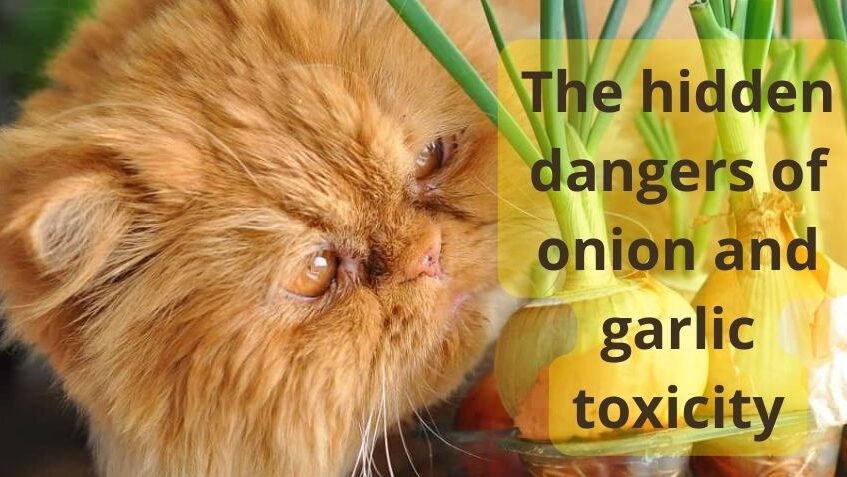
The hidden dangers of onion and garlic toxicity
Did you know that onions and garlic in any form (raw, cooked, dehydrated, or powdered in a seasoning) can create a life-threatening form of anemia in both dogs and cats?
Onions and garlic contain a substance called thiosulphate which dogs and cats cannot properly digest. A build-up of thiosulphate causes a protein called hemoglobin, which is carried by red blood cells, to form clumps which in turn cause the red blood cells to rupture.
What happens to onion and garlic toxicity?
Onions and garlic contain a substance called thiosulphate which dogs and cats cannot properly digest. A build-up of thiosulphate causes a protein called hemoglobin, which is carried by red blood cells, to form clumps which in turn cause the red blood cells to rupture. When enough red blood cells are destroyed, anemia occurs and the body is starved of oxygen. The degree of anemia usually depends on the number of onion or garlic eaten and some dogs and cats can develop severe reactions even after eating very little. Small amounts of onion/garlic fed over a longer period of time can create illness just as a one-time dose can. Symptoms of toxicity sometimes take several days to become apparent and can include weakness/lethargy, vomiting, diarrhea, difficulty breathing, collapse, pale or bluish gums and/or an increased heart rate.
How much onion or garlic is toxic?
The number of onion/garlic (in grams) that can cause toxicity is equal to 0.5% of the animal’s body weight. For example, a 10kg fox terrier needs to ingest 50 grams and symptoms may become apparent. This works out to be only a quarter of an average-sized onion.
Treatment of onion and garlic toxicity
If ingestion was recent, making the animal vomit and giving intravenous fluids is the traditional treatment. If anemia is severe, a lengthy hospital stay and a blood transfusion may be necessary.
Preventing onion toxicity
Onions and garlic are common in many human foods, including some baby foods, sandwich meats, canned spaghetti, burger patties, gravies and fast foods. Carefully check the ingredients of any table food before treating your dog or cat to a snack. Avoid adding onions in any form to homemade pet food recipes and always make sure rubbish is kept covered and away from your pets.
You may also visit – https://www.facebook.com/angkopparasahayop


