
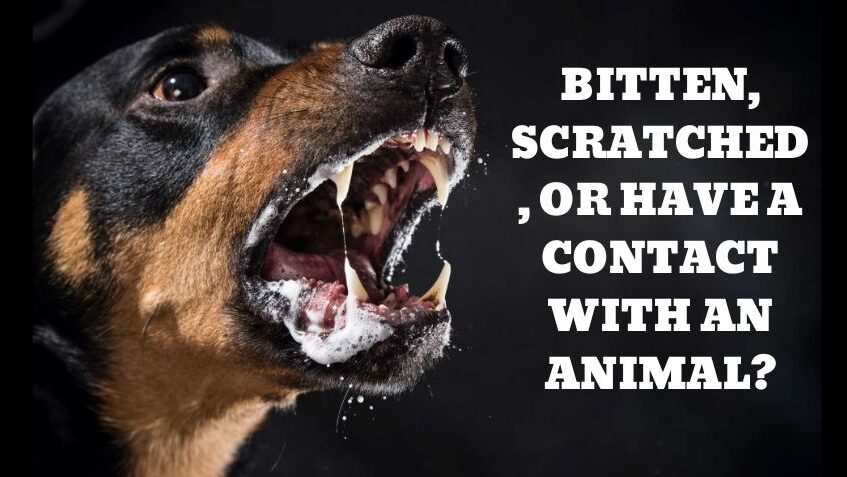
WHAT IF BITTEN, SCRATCHED BY, OR HAVE A CONTACT WITH AN ANIMAL?
Your doctor should examine any animal bites. Immediate medical attention may not always be possible, but you should get the bite checked by your doctor as soon as possible. Once a bite has occurred, it’s important to be on the lookout for signs or symptoms of infection.
At the time a potentially rabid animal bites you, there’s no way to know whether the animal has transmitted the rabies virus to you. It’s common not to find bite marks, too. Your doctor may order many tests to detect the rabies virus, but they may need to be repeated later to confirm whether you’re carrying the virus. Your doctor will likely recommend treatment as soon as possible to prevent the rabies virus from infecting your body if there’s a chance you may have been exposed to the rabies virus.
If YOU are Bitten, Scratched, or have Contact with an Animal:
Obtain the owner’s address and telephone number if possible.
Immediately wash the wound thoroughly, cleaning and flushing with plenty of soap and water for several minutes.
Immediately report all animal bites to your animal control agency, police department of health department for follow-up.
Identify and continue to observe the animal (if wild or stray) to aid its eventual capture, but do not risk exposure again.
Get prompt medical attention. Call your family doctor or go to the nearest emergency room.
If Pets are Bitten, Scratched, or have Contact with a Wild Animal:
Call your pet away from the animal.
Confine the wild animal, if possible. (Do not touch it or risk exposing yourself.)
To prevent exposure of saliva to an open wound, it is recommended that you do not handle pets, touch or examine your dog or cat for at least two hours following the fight.
If you must handle your pet shortly after a fight, wear heavy gloves and afterwards be sure to thoroughly wash your hands with soap and water. Then contact your doctor or local health department for advice to determine whether or not there may have been any direct exposure to the rabies.
Contact your local or community animal control agency immediately for advice about testing the wild animal for rabies and follow-up for your pet.
What if my pet has bitten someone?
Urge the victim to see a physician immediately and to follow the physician’s recommendations.
Check with your veterinarian to determine if your pet’s vaccinations are up-to-date.
Report the bite to the local health department and animal control authorities. Local regulations may require that your pet is confined and isolated for monitoring for signs of rabies.
Immediately report any illness or unusual behavior by your pet to the local health department and to your veterinarian.
Don’t let your pet stray and don’t give your pet away. The animal must be available for observation by public health authorities or a veterinarian.
After the observation period, have your pet vaccinated for rabies if its vaccination is not current.


