
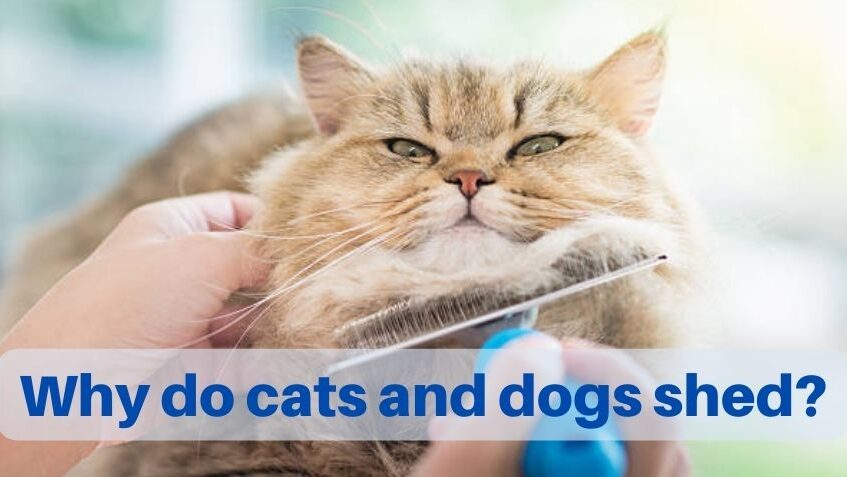
Why do cats and dogs shed?
Shedding is a regular part of life for animals with hair, and not a waste of effort. Normally, shedding helps to remove dead hair and release natural oils in the skin. If dead hair does not get removed, skin irritation can result.
In addition, cats and dogs often seasonally undergo molting, or heavy shedding, about twice a year to help them control their body temperature.
Cats and dogs have three types of hair: primary hairs which are long and coarse, secondary hairs which are soft and fluffy and tactile hairs which include whiskers. Shedding is a natural means for your cat or dog to lose dead or damaged hairs (usually secondary hairs). However, the amount and frequency of shedding can depend on a number of factors:
Breed
We often choose our cats and dogs for their breed and length of hair. The hair type of your pet will have a major impact on when he or she sheds. For dogs, the lightest shedders tend to be the breeds that need clipping as their hair falls out at a slower rate, eg. Poodles and Schnauzers. While long-haired breeds may appear to shed more, it’s often the length of the hair that gives this illusion. The same is often true of cats. Knowing your breed and understanding its shedding pattern will be helpful in managing it.
Season
Sunlight and temperature have a significant impact on an animal’s hair growth. Outdoor pets will commonly shed once or twice a year – usually at the end of winter. However, as indoor pets live in much more controlled conditions they will usually shed continuously throughout the year.
Pregnancy
Pregnancy and lactation can deplete animals of the calcium and minerals they need for a healthy coat. This can lead to excessive shedding (or shedding out of season). Cats and dogs will often shed their fur after giving birth or during the nursing period. If your cat or dog becomes pregnant, it may be worth putting her on a special diet or supplements to strengthen her coat. Contact us for further advice.
Illness
Shedding can also result from an underlying medical problem. In a healthy pet, the skin after shedding should look normal and undisturbed. If the skin is irritated or red, or your pet has bites, sores, rashes or dry hair that pulls out easily, it may be time to see the vet. Common causes for excessive or problematic shedding include:
Stress
- Allergies
- Poor nutrition
- Fleas or parasites
- Dirty or irritated skin
- Hormonal deficiencies or changes
While we cannot prevent our cats and dogs natural shedding cycles, it’s important to know when shedding is ‘normal’ and when it is symptomatic of an underlying illness or parasite.
Visit your veterinarian as early recognition, diagnosis, and treatment are essential.
You may also visit – https://www.facebook.com/angkopparasahayop


