
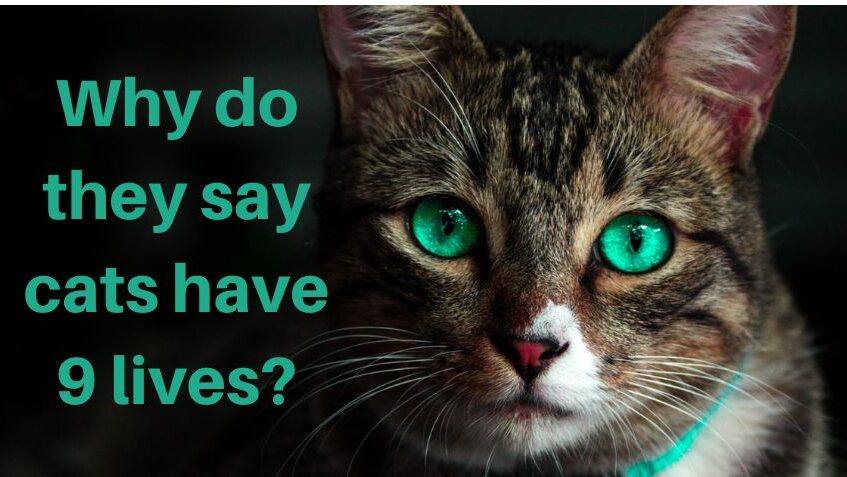
Why do they say cats have 9 lives?
There is also an ancient proverb that claims, “A cat has nine lives. For three he plays, for three he strays, and for the last three he stays.” Some people believe the nine lives myth is related to cats’ ability to always land on their feet. Cats are also known for their dexterity and agility.
A cat is one of the most agile, quick-witted, and independent pets out there. In particular, cats can withstand falls that would easily kill a human – which perhaps explains where the idea that a cat has nine lives came from. This ability to survive against the odds is all thanks to a cat’s amazing anatomy:
- Cats evolved to live in trees, and many wild feline species still do. Millions of years of springing or falling from a height ensure they have adapted to handle it well.
- Their impressive ‘righting reflex’ enables them to twist their bodies around while falling, to land squarely on all four feet.
- Cats have a large body surface area compared with their weight, which also helps reduce the force of their landing.
- They also have great flexibility in their bones and ligaments, which helps them to sustain minimal injury from impacts.
Average cat lifespan
Cats may not really have nine lives, but factors such as diet, healthcare, and environment can have an impact on how long a cat can live. Neutered cats tend to live longer because neutering prevents reproductive diseases and neutered cats are less likely to roam. Some domestic cats can live up to 20 years old.
Life stages
Kitten (up to 6 months)
This is the best stage to introduce your cat to lots of new things such as other pets, household noises, being brushed and handled, as well as familiarizing them with children.
You’ll see them go through their most rapid growth spurt during this time. This is also a good time to neuter your pet to stop unwanted litter.
Junior (6 months to 2 years)
Your cat will reach full size during this period of time and will have reached sexual maturity.
It is important to play appropriately with your pet as this will teach them how to play nicely with people. This means ensuring not to play rough and tumble games with your cat; instead, use toys to engage with them.
Playing with your hands can encourage biting and scratching, which may seem cute when they’re a kitten, but remember that they soon grow up and the bites and scratches will get harder.
Prime (3 to 6 years)
As the name of this phase suggests, your cat will be at its prime in life during these years. While they are young and healthy it’s still important to ensure that your cat remains up to date on their vaccinations and health checks to help prevent any diseases or illnesses.
Mature (7 to 10 years)
At this age, your cat will be the human equivalent of someone in their mid-forties to mid-fifties.
This means that you may notice your pet starting to slow down and they are more likely to put on some weight. It’s important to carefully monitor their food consumption so that they are having the right amount for their level of activity. If you are unsure as to whether your cat is overweight or unsure about how to cut back on meal times, please speak to your vet.
Senior (11 – 14 years)
This sees your cat reach the human age of 70 years old which means that they may start needing more mental stimulation to keep them happy.
Enriching your cat’s environment should be done throughout their lives, and should be continued into their senior years, especially as cats tend to relax a lot more at this age. Food puzzles are a great way to keep your cat entertained and, if they are slightly overweight, it can keep them busy and active while trying to get their food!
Geriatric (15 years and older)
Some cats can reach this age with no signs of slowing down (lucky for some!) but for others, they may start to live life in the slow lane, happily snoozing the day away on their favorite pillow.
Geriatric cats will need to be monitored more closely for any changes in their behavior; this can include things like vocalization and frequency of going to the toilet. If you notice anything out of the ordinary then it’s best to book an appointment with your vet.
You may also visit – https://www.facebook.com/angkopparasahayop


