
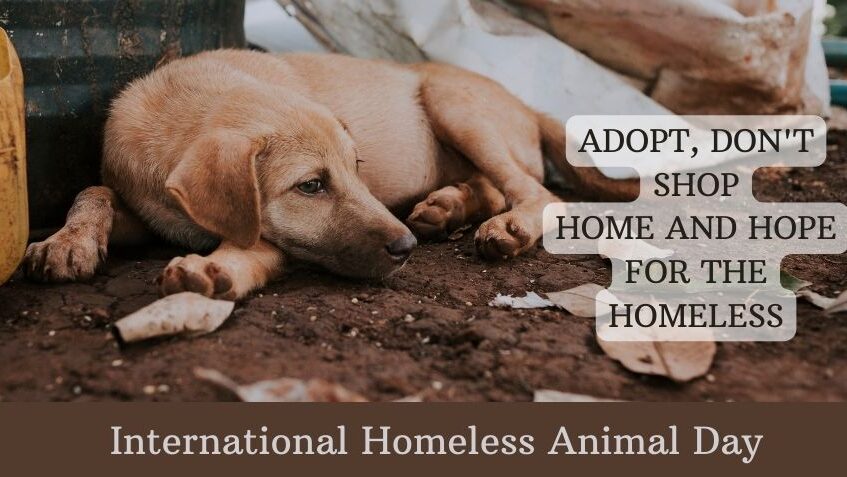
𝗜𝗡𝗧𝗘𝗥𝗡𝗔𝗧𝗜𝗢𝗡𝗔𝗟 𝗛𝗢𝗠𝗘𝗟𝗘𝗦𝗦 𝗔𝗡𝗜𝗠𝗔𝗟𝗦 𝗗𝗔𝗬
“𝑩𝒆𝒄𝒐𝒎𝒆 𝑷𝒂𝒓𝒕 𝑶𝒇 𝑻𝒉𝒆 𝑺𝒐𝒍𝒖𝒕𝒊𝒐𝒏”
𝑎𝑛𝑑 𝑡ℎ𝑒𝑟𝑒 𝑎𝑟𝑒 𝑝𝑙𝑒𝑛𝑡𝑦 𝑜𝑓 𝑤𝑎𝑦𝑠 𝑡𝑜 𝑑𝑜 𝑠𝑜!
August 21 is International Homeless Day. It focuses on the pet overpopulation problem and how to help solve it.
In other words, the plan is to make noise until the international community takes steps to end cat and dog overpopulation and homelessness. That’s what “International Homeless Animals” Day is all about!
There are many ways to combat cat and dog homelessness in the world. We’ve listed 3 simple ways that we can all do it!
- Commit to volunteering at your local animal shelter
- Adopt a homeless cat or dog
- Start raising money for your local animal shelter
- Educate others on the importance of spaying/neutering
- Encourage people to adopt a pet rather than buy one
All of these efforts help control the pet population and keep companion animals in homes with loving families where they belong.
Animal homelessness happens everywhere. However, there are strong concentrations in poor communities worldwide.
Furthermore, in many parts of the world, animals that we think of as pets run wild in the streets and towns. In some of these places, it’s understandable because the people who live there can barely feed and care for themselves and their loved ones, let alone take in animals.
This is why the international community needs to take an interest in animal homelessness. We should help these communities and companion animals who cannot help themselves.
𝗛𝗜𝗦𝗧𝗢𝗥𝗬 𝗢𝗙 𝗜𝗡𝗧𝗘𝗥𝗡𝗔𝗧𝗜𝗢𝗡𝗔𝗟 𝗛𝗢𝗠𝗘𝗟𝗘𝗦𝗦 𝗔𝗡𝗜𝗠𝗔𝗟𝗦 𝗗𝗔𝗬
The histories of animal rights and shelters have long been intertwined. It was in the 1870s that animal protectionists began to see the lives of children and animals as similarly vulnerable and in need of protection, and SPCAs and anti-cruelty laws began to be established. Though animals were defined as property, cruelty was still an offense.
The 20th century saw increased protection given to house pets such as dogs and cats, the while animals that were slaughtered or working animals still received little to no protection. Dogs and cats received even more attention from the social justice movements of the 1960s and 1970s when animal welfare groups like the ASPCA focused heavily on adoption, fostering, and prevention of animal suffering.
These same goals and guiding values remain prominent in animal shelters and animal rights groups today, as people continuously fight for better legal and physical protections for our furry friends. In 1986, the passage of the Georgia Animal Protection Act provided for the licensing of kennels, animal shelters, pet stores, and stables, and was the first legislation to demand a minimum standard of care for the animals housed in these facilities. This was a huge win for animal rights groups. Other provisions and act, respectively, that expanded animal rights was the Humane Euthanasia Act of 1990 and the Animal Rights Act of 2000.
Though there is no governmental organization in the United States to oversee animal shelter regulation nationally, there are approximately 5,000 independently-operated animal shelters in the nation. Most of these shelters changed their focus in the 1990s, shifting from being temporary animal repositories to proactively helping control the homeless pet population and promoting pet adoption. Shelters often respond to cat overpopulation with volunteers to conduct TNR programs, in which they trap, neuter, and return cats to where they were found. This greatly reduces both overpopulation and the burden on the shelters.
In 1992, the International Society for Animal Rights conceived International Homeless Animals Day (IHAD), which has only grown in popularity by year. ISAR offers events from dog walks to adopt-a-thons to animal blessings on IHAD, and many volunteers participate. Today, and every day, we can all be a voice for homeless animals, and help mitigate their suffering.
CTTO, References:
https://nationaltoday.com/international-homeless-animals-day/
https://nationaldaycalendar.com/international-homeless-animals-day-third-saturday-in-august/


