Blog

18 Aug
0

NATIONAL ASPIN DAY!

OUR ASPIN BUDDIES AND THE THINGS WE LOVE ABOUT THEM

They are loveable, resilient, low-maintenance, and can be the most affectionate and loyal companions, no wonder we love them the most.  But do we deserve them?

ASPIN is our native dog.  ASPIN is derived from two Filipino words, “Aso” and “Pinoy.” Prior to being called ASPIN, it was formerly known as ASKAL (an amalgamation of two Filipino words “asong” and “kalye,” meaning “street dog”).  Scientists call them “village dogs’ ‘ in their studies, unpedigreed, indigenous dogs living. They have traditionally been used as guard dogs.

Every aspin is UNIQUE. If you look into their eyes, it’s different. They may be similar in color, but every aspin has a different personality.  They have no clear lineage. The Aspin dog breed is a mixed breed, which means that it has parents of different breeds. It’s difficult to pinpoint exactly where aspins’ ancestors originate but they have always played an important role in Filipino culture.

Most Aspins are medium-sized dogs that stand at no more than two feet in height. Their coats are usually short and rough with varying colors. They can be brown, black, white, brindled or spotted.

What’s great about Aspins is that they are lovable, resilient, and low-maintenance.  When given the right care and attention, aspins can be the most loyal and loving companions.

You don’t usually find Aspins in pet stores, but you can find a lot of them in animal shelters – adopt and give an aspin a new chance, a new life to live and enjoy!

You may also visit – https://www.facebook.com/angkopparasahayop

Read More
15 Aug
0

What Do Cats Eat?

What Do Cats Eat?


There is a lot of information online about what you should and shouldn’t feed your cat. So much information, in fact, that it can get confusing. This guide provides information about what you should know when feeding your cat.

Cats are carnivores, so they need a source of animal protein to be in optimal health. You’ll need to find a high-quality commercial cat food appropriate for your cat’s age and health. If necessary, speak to your veterinarian before you choose what to feed your cat as they can assess their health status as well as ensure you’re feeding them the right kind of food.

Cats will never survive or thrive on a vegan diet. They must have meat to get the nutrients they require.

While it’s perfectly acceptable to feed your cat commercial dry or wet food, you can offer variety in your feline’s diet by feeding it cooked or raw, fresh meat.

Many cats love fish; however, it is not an acceptable food for daily feeding. Fish contains high levels of fatty acids, which can lead to a vitamin E deficiency in cats and painful conditions


Food in relation to your cat’s age

Cats need meat — you shouldn’t feed them a vegetarian diet. They also need a good balance of fat, carbohydrates, vitamins, minerals, fatty acids, and amino acids, which are building blocks for protein. Cats’ dietary needs change with age and health.


Kitten Diet

Kittens need their mother’s milk from birth until they are 4 weeks old. Once weaning starts, they need high amounts of protein. As kittens grow, the amount of protein they need will steadily drop. Kittens also need calcium as well as fats for energy and fat-soluble vitamins.

Kittens can start to eat wet food after their eyes open and they can move around well on their own. You can start to introduce dry food at 6 weeks, but the main food should be wet food that is high in protein.


Adult Cat Diet

Adult cats need a balanced diet for healthy tissues and body systems. A diet of 50-60% protein and 30-50% fat is usually a good balance. If your cat isn’t very active, your vet might suggest different amounts. One of the most important parts of a cat diet is access to plenty of fresh, clean water.


A balanced meal once or twice a day for adult cats is best in most cases. This is also best for senior cats 7 and older. Sometimes cats have health conditions like diabetes or hyperthyroidism, which involves the overproduction of thyroid hormones, that can cause undereating or overeating. This condition can be treated so that your cat will return to eating normally.


Senior Cat Diet

There are no specific nutrition guidelines for senior cats. A senior diet usually starts around age 7, but it’s best to talk to your vet and set up a diet that suits your cat’s health.

There are lots of types of cat food. The most important factor in choosing the best food is reading the labels and making sure the type of food is balanced with the right amount of nutrients.


Types of Cat Food

Dry Food

Dry food is made of a mixture of meat and meat byproducts, grain, vitamins, minerals, poultry and poultry byproducts, and fish meal. This mixture is dried into small bite sizes and is often coated in fat, which helps with taste. Sometimes, though, cats don’t like dry food and don’t digest it very well.


Semi-moist Food

Semi-moist food is made mostly of meat and meat byproducts with some fillers and preservatives added. This type of food has more moisture and might be tastier to cats. Once the package is opened, though, the food can dry out, harden, and spoil.


Canned Food

Canned cat food contains only meats and meat by-products. It has high moisture and is a good food source of water for your cat. It’s much tastier for your cat, but some brands may not have all the nutrition your cat needs. Canned cat food should be kept in the fridge once it’s opened.


Homemade Food

You may want to make your own cat food, but this is generally not recommended unless your vet tells you this is the best option. Homemade food often doesn’t have the right balance of proteins, fats, carbohydrates, and vitamins and minerals.


Treats

You can give your cat occasional treats. Raw meat and canned fish for humans are not recommended because cats can get sick from eating these foods. It’s also best not to feed your cat milk because cats can be lactose-intolerant.


What to Do if Your Cat Won’t Eat

Sometimes cats can be picky about where they eat and the type of food they enjoy, and they may not eat what you’re feeding them. This can be normal behavior, and a few simple changes can help. These might include:

  • Moving food dishes away from litter boxes or dirty food containers
  • Moving food dishes out of busy areas
  • Feeding your cat away from other animals


Being careful with your cat’s diet is essential to their health, so it should be an area of care for all cat owners. If in doubt about what to feed your feline friend, speak with your veterinarian for more information.

Read More
01 Aug
0

How Your Feline Uses His Senses

How Your Feline Uses His Senses


Your cat’s senses are very keen and are designed to help your feline friend operate smoothly in his environment. From high-powered ears to a sensitive nose, your cat can sense things in ways that humans can only dream about. Here’s how your cat uses his senses to his advantage:


Sight

Anyone who has seen their pet cat’s round eyes gleaming in the darkness has probably assumed that cats can see very well in low-light situations. This is absolutely correct. Cats can use their eyes to see very well at night, much better than humans can in dark situations. This is because cats have special layers in their eyes that reflect light, allowing them to use it more efficiently than other animals. A cat’s eyesight during the day and in high-light situations, however, is actually worse than a human.

Aside from this, a cat’s eyesight has many other features differentiating it from humans. Since cats are predators, they have very good depth perception, as well as a vision that focuses mainly on movement. Another feature that helps them hunt is that their eyes do not need to be lubricated by blinking. This helps them keep a steady focus on their prey.

Your cat’s sight is extraordinary, especially peripheral vision. A cat’s pupils can dilate wider to capture a panoramic view of the landscape. They are also specialists in detecting movement, a trait honed over thousands of years of hunting. It’s interesting to note, however, that cat’s do have a blind spot right under their chins. Despite their amazing sight, they can literally overlook something within reach.


Smell

While a cat’s eyesight has its pros and cons, its sense of smell is indisputably better than that of a human. In fact, their sense of smell is almost fifteen times stronger than ours, meaning your pet cat can use their nose to navigate their environment. It’s not just their nose that knows, though, as cats are equipped with a second scent sensor, a pair of organs called the Jacobson’s organs, located in the roof of their mouth. If you see your cat grimacing or sneering by pulling back his upper lip, and opening his mouth, it means he is using this secondary sense of smell.

Our cat’s sense of smell is critical to learning about the environment. About 200 million odor-sensitive, cells are found in a typical cat’s nose. Humans only have five million. Cats not only use their noses in conjunction with eating, they also rely on their sense of smell to communicate with each other.


Hearing

As with their sense of smell, cats have a very advanced sense of hearing, as felines make good use of their large, perky ears. While cats hear sounds about as low as humans, they can hear much higher pitches than we can, and their range goes even above that of dogs. Additionally, they can discriminate between different tones and pitches much better than we can. As for using this sense, cats can use their hearing to pinpoint prey very well. Both of their ears can swivel and move independently of each other, which is very useful for finding the sources of certain sounds. Amazingly, cats are able to distinguish between sounds that occur as close as 3 inches apart.

So many sounds are beyond the capacity of your ears, but your cat picks up on them with no problem. Cats even hear better than dogs. A range of 48 HZ to 85 kHz gives felines one of the broadest hearing ranges among mammals.


Taste

Taste is the weakest of the cat senses, as cats have significantly fewer taste buds than either dogs or humans. Cats, since they are carnivores, have senses of taste that strongly identify and prefer fats and proteins. On the other hand, they do not have much of a taste for sweets, nor do they seek out salty foods, as they get all the salt they need from their meat-heavy diet.

There’s a reason cats won’t necessarily eat just any cat food you put in front of them. They only have about 470 taste buds. That sounds like a lot, but compare it to your own mouth that includes more than 9,000. Not only do cats have fewer taste buds, but they’re also not as sensitive. That’s why they rely more on their sense of smell when it comes to choosing food.


Touch

Whiskers and paws do the investigative work in a cat’s environment. Cats have whiskers on the backs of their front legs in addition to their face. They use whiskers to feel out objects around them and determine things like whether they can squeeze through a narrow opening. Certain whiskers help cats stalk prey in dim light.

While cats sense touch much as we do with their paws and the rest of their body, the most remarkable aspect of this cat sense is their whiskers. These special hairs provide your cat with detailed sensory information; helping him to create a deep understanding of his world.


You may also visit – https://www.facebook.com/angkopparasahayop

Read More
27 Jul
0

Earthquake preparedness tips – for your pets

Earthquake preparedness tips – for your pets: How to keep them safe


Are you and your pet prepared for earthquakes or other emergency evacuations? If you aren’t prepared, your animal companions aren’t prepared.

We’ve got an earthquake preparedness checklist – follow these tips to keep you and your pets safe before, during, and after an earthquake:


  • Create a disaster plan for your family, pets included
  • Make sure pets are properly identified (collar, tags, microchip), and keep all contact information current.
  • Keep vaccine records, tag and microchip contact info, I.D. numbers, and vet info handy. Keep a copy in your smartphone, but also consider a hard copy in your house and car.
  • Make sure you have a recent picture of you and your pet. This is important if you get separated from your animals and need proof of “ownership.”
  • An up-close and clear picture of your pet, especially any distinctive markings
  • Be familiar with hiding places. Some pets, especially cats, will hide when they’re frightened. Take note of where they have hidden in the past.
  • If your pet becomes lost or stays in a shelter with other animals, he may be exposed to infectious diseases. Consider consulting a veterinarian after your pet comes home.
  • Check animal shelters. If your pet becomes lost, make the local animal shelter your first place to look.
  • Experiencing an earthquake can be frightening, but if you are prepared ahead of time, you’ll have the tools to help navigate your family and pets safely through this unpredictable experience.


You may also visit – https://www.facebook.com/angkopparasahayop

Read More
25 Jul
0

How to Read Your Cat’s Tail Language

What does it really mean when your cat has their tail up, down, or swishing around?


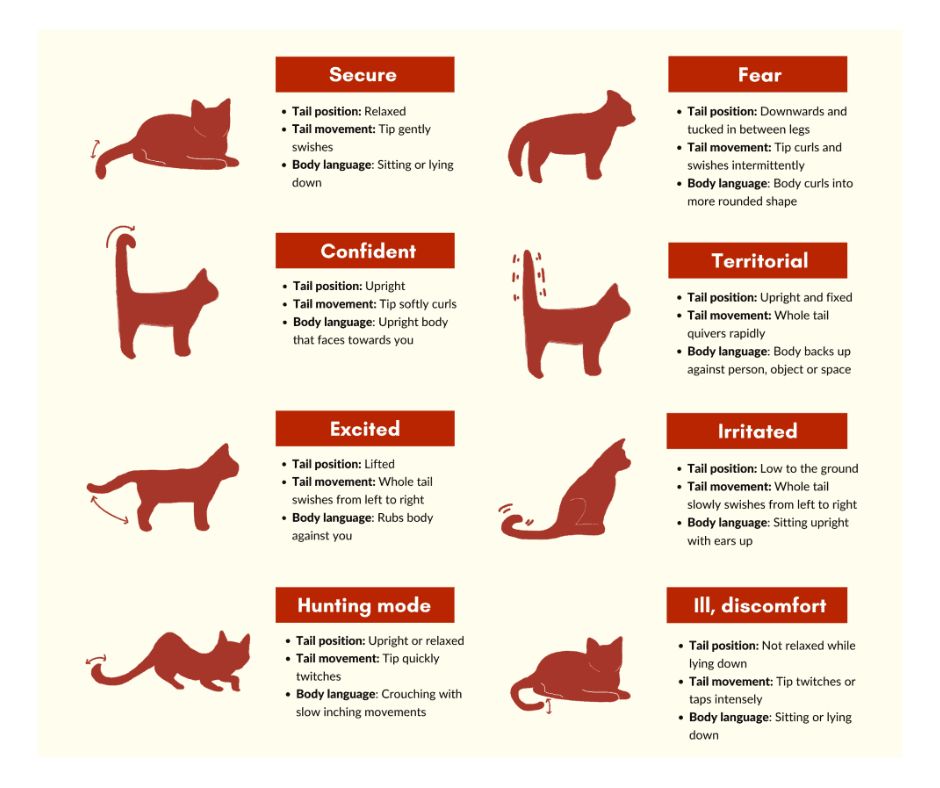
Why Do Cats Wag Their Tails? Just like dogs, cats move their tails to express their emotions. So, what does it mean when a cat wags its tail? Let us look at the different “wagging” tail movements and what they mean.
Cat tails up

The best-understood cat tail signal is probably a tail held up vertically, sometimes with the tip slightly curled, like a question mark. To help understand cat tail language, one researcher from the University of Southampton presented cats with life-sized cat silhouettes with their tails in different positions. When the image showed the cat’s tail up, the real cats approached more quickly and frequently reciprocated the signal. In effect, an upright cat tail says ‘I’m friendly’, thereby reducing the risk of a fight. If your cat greets you or other cats in your household with their tail up, it’s a clear sign of confidence, friendliness, and affection.


Thrashing Tail Movements

When your cat thrashes their tail or is thumping it on the ground, they are irritated, annoyed, or angry. This tells you that something is bothering your cat.

This is a distance-increasing behavior. In other words, if you are petting your cat and they start thrashing their tail, they are trying to tell you to stop. If you do not, then the thrashing tail may be a prelude to hissing, growling, swatting, or biting.


Cat waving tail from side to side

Cat tail movements can also tell us about how our felines are feeling. Strong movement often signals strong emotions. So, if your cat’s tail is lashing from side to side and thumping on the ground, this indicates that they are highly agitated, and it’s probably best to leave them well alone.

Watch out, too, for a fluffed-up cat tail – this is a defensive reaction to make the cat appear bigger. A furiously waving tail can occur during play or hunting (positive emotion) or due to frustration and anger (negative emotion). Either way, your cat is charged and ready to act.

Conversely, soft, fluid cat tail movements suggest a lack of tension. So, a cat tail waving slowly from side to side may indicate a less urgent conflict, like indecision. Take note of your cat’s environment and their overall body language and vocalizations to get a clearer indication of the message intended.


Cat tail wrapped or tucked

Cats that are feeling relaxed appear loose and open, whereas a cat that does not wish to interact will withdraw. In terms of cat tail language, this is most clearly indicated when a cat’s tail is wrapped around their body or tucked underneath them, instead of lying loose on the ground, extending away from their body. Your cat may just want a cozy snooze or be a bit chilly, but a wrapped tail can sometimes signal stress and anxiety.

To decide what is going on, consider the whole picture and setting. Is your cat snuggled down with its nose tucked in, for warmth? Or is their tail held tightly around their body or awkwardly just above the ground, indicating tension? Do their eyes appear soft and blinking (relaxed) or wide and staring (aroused)? Pay attention, too, when your cat moves – a tail tucked between their hind legs can suggest they feel threatened and may lash out.

Although your cat’s tail provides some excellent clues to what is going on inside their head, it’s important to remember that ‘reading’ just their tail is like picking odd words out of a sentence – you could easily misinterpret what’s being said. You will get a greater understanding of your cat’s mood and emotions by observing their tail movements alongside their entire body language and the environment they are in.


Twitching the End of the Tail

Cats twitch the end of their tails when they are hunting and playing, as well as when they are mildly irritated and frustrated. In this case, read the scene and look for other clues to their mood. If they are not playing or stalking something, then the twitching tail movement probably means that they are annoyed.


Tail Quivers

Your cat may quiver their tail when they are especially excited to see you or another cat. Sometimes, when a cat quivers his tail while holding it straight up and backing up against a vertical surface, it may be urine marking.


What Does a Tail in a Question Mark or Hook Shape Mean?

You may notice that sometimes your cat’s tail looks like a question mark—it stands upright and curls at the end. This cat tail language indicates that your cat is happy and approaching amicably.


Seeing your cat’s tail in this position is an invitation to interact with your cat. However, while it is tempting to a pet with that curly-tipped tail, most cats prefer to be petted around their facial glands on their cheeks, under their chin, and next to their ears.


Why Do Cats Fluff Up Their Tails?

If your cat assumes the quintessential Halloween-cat posture with a puffed tail and arched back, then they are startled or frightened by a sudden, severe threat.

Your cat’s hair stands on end (piloerection) so that it can appear to be larger. This is a defensive reaction indicating that your cat wishes to be left alone.

This tail position is often triggered by feeling threatened by other animals in the yard, dogs approaching, visitors in the home, or sudden noises. Remove the inciting triggers to decrease your cat’s stress. If you try to interact with your cat when their hair is standing up, they may perceive your approach as a threat and become aggressive.


What If Your Cat’s Tail Is Held Low to the Ground?

A cat may lower their tail below the level of its back if they are frightened or anxious. If your cat’s tail is tucked between its legs, then they are really scared or may be experiencing pain.


Why Do Cats Curl Their Tails Around Their Bodies?

If your cat is sitting or lying down with their tail wrapped around their body, then they are frightened, defensive, in pain, or feeling unwell. When you see this, end your interaction with your cat and ensure that your cat’s environment is free of stressors.

If your cat frequently crouches with its tail curled tightly around its body for more than a few days, then an evaluation by your veterinarian is warranted to rule out pain or illness.

Although you should look at more than just their tail movements, to fully understand your cat’s emotional state, the tail may be the most expressive part of a cat’s body language. Better understanding your cat’s body language will surely improve your bond with your cat.


You may also visit – https://www.facebook.com/angkopparasahayop

Read More
25 Jul
0

Why Cat Teeth Cleaning is Worth the Cost

Why Cat Teeth Cleaning is Worth the Cost

Cat teeth cleanings are expensive because cats require general anesthesia for the procedure, and people are reluctant to shell out the bucks for a procedure that may not seem necessary. Yes, cat dental cleanings are on the spendy side, but I think they are totally worth the cost, and here is why.

Once your cat has dental tartar, gingivitis, or more advanced periodontitis, professional dental cleaning is the only way to get rid of it. It makes financial sense to pay for professional teeth cleaning before these issues come up, or before they turn into more costly issues that cause your pet to suffer


  1. Cats do not naturally have horrible breath

Even if a cat eats tuna every day, his breath should not smell bad. If your cat’s breath smells like something is rotting in his mouth, the odds are that he has an infection or tooth decay.


  1. Cat dental disease is very painful

Have you ever had an abscessed tooth or serious gum disease? If so, you know it hurts! It hurts cats, too, but our cats are masters at hiding their pain. It is an ingrained and instinctive survival technique. The only indication you may have of your cat’s pain is a change in temperament. Even with sore teeth and gums, a cat will still eat because hunger trumps pain — until the pain gets too severe, that is.


  1. Dental disease does not just stay in your cat’s mouth

An infection that begins as gingivitis can progress to the point where your cat develops infections in the bones, lungs, and even the bloodstream itself. The cost of treating a life-threatening systemic infection is a lot higher than the cost of those annual cat teeth cleanings.


  1. Cat dental disease can complicate other illnesses

Diabetic cats with dental disease, for example, suffer more than others because chronic oral infections make it difficult to keep blood sugar levels under control.


  1. Cat dental disease can lead to other illnesses

Research has shown that dental disease increases the risk of diabetes, infections of the heart and lungs, kidney disease, autoimmune diseases, arthritis, heart failure, and even cancer.


What are the health benefits?


Just like humans, cats can suffer from dental disorders like periodontal disease or tooth decay. These can be painful and dangerous to your cat’s health. Not only could they lose teeth, but dental diseases also could affect other areas of their health.


Here are some symptoms to look for at home that could indicate your cat is experiencing oral pain.

  • Dropping food
  • No interest in eating
  • Running away from the bowl
  • Drooling
  • Bad breath
  • Change in behavior
  • Chewing on one side
  • Trouble chewing
  • Swallowing without chewing


A cat with unresolved dental issues can also be at higher risk for heart, liver, and kidney disease.

Visit your veterinarian as early recognition, diagnosis, and treatment are essential.

You may also visit – https://www.facebook.com/angkopparasahayop

Read More

18 Jul
0

Is Your Senior Cat in Pain?

Is Your Senior Cat in Pain?


As cats age, we generally see changes in their behavior. The wild and crazy playful activities we associate with kittens give way to adult cats sleeping in the sun and prowling around the house. We commonly presume senior cats will take even longer naps in the sun or on our beds. It is important, however, to differentiate normal feline behaviors from abnormal ones, as some behavior changes in aging cats arise from pain and are definitely not normal. Cats are very good at hiding signs of pain, so cat owners need to be very observant to recognize when their cat needs extra help.


Some cats begin showing age-related physical signs as early as age seven, while others are still friskier than kittens at ten. A general rule of thumb is that a cat is classified as “senior” if she’s over 11 years of age.

As the parent of an aging cat, you’ll want to watch for changes in behavior that could signify an underlying problem. Here are five common age-related symptoms and conditions you might see in an older kitty:

  1. Sleeping all the time or not at all

While slowing down a cat’s age is normal, if you notice your cat is sleeping all the time or more deeply than normal it might indicate a more serious health problem. Conversely, cats that are more active at night and not sleeping as much, might be experiencing age-related changes.


  1. Confusion

If your cat is getting confused by ordinary tasks or objects, she is used to navigating like finding her bed she may be reaching her golden years. This can also be a sign of larger cognitive issues, so you should consult your vet if you notice this type of behavior.


  1. Having trouble climbing stairs or jumping

Arthritis is common in older cats. While your cat might not limp or show other obvious signs of painful joints, you might notice she has more difficulty than she used to jumping into a litter box, climbing stairs, or jumping on furniture.


  1. Unintentional weight loss or weight gain

In an older cat, weight loss can be a sign of any number of problems, from heart and kidney disease to diabetes.  Some pets’ food and energy needs can increase as they move from adult to senior cats, and they may lose weight faster than they can eat to catch up. On the opposite side of the spectrum, as cats age, their metabolism slows down so they don’t need as many calories as they used to. If you notice your cat is starting to pack on the pounds, it might be time to transition to senior cat food that is better equipped to meet her biological needs.


  1. Behavioral changes

Is your cat having accidents when she never did before? Is she avoiding human interaction? These can be signs of a cat in kidney failure, a cat in pain, or a cat that is mentally confused — health conditions that are more prevalent in senior-aged cats. Your veterinarian can help you get to the bottom of your cat’s behavioral changes.


  1. Matted or oily fur

A cat that has stopped self-grooming could be in pain because of arthritis or dental issues.


Older cats should see a vet every six months. But if you notice any change in your cat’s behavior or appearance you should never hesitate to call sooner. A vet, after all, will be familiar with all the signs of aging in cats.


Caring for Senior Cat

You can also take some easy steps at home to improve your cat’s quality of life in her senior years:

  1. Choose a high-quality food made for senior cats: Youthful Vitality 7+ Cat Food, for instance, is specially formulated to support brain function, energy and vitality, healthy kidneys and bladder, healthy digestive system, and luxurious fur.


  1. Give her a warm place to rest, especially if she suffers from arthritis. She’ll appreciate you moving her bed from a drafty area.


  1. Think easy access. Give her a litter box, water bowl, and food bowl on every floor of your house. If she seems to be having trouble climbing into the litter box, find one with lower sides or even try an old cookie sheet.


  1. Help her groom. Many people rarely brush their cats because they are such good self-groomers. But as your cat ages, brushing your cat serves a dual purpose of acting as a bonding activity and keeping her coat healthy when she can no longer do it alone.


  1. Continue to Exercise Her.


It’s important to remember that aging is not a disease.

Aging is a natural process, and the body — whether human or feline — goes through many complex physical changes as the years progress. But even though some of your cat’s conditions might not be easily cured, they can likely be controlled.

Help your cat enjoy her senior years by making sure she has access to vet care and that she has plenty of love and attention at home.

Visit your veterinarian as early recognition, diagnosis, and treatment are essential.

You may also visit – https://www.facebook.com/angkopparasahayop

Read More
18 Jul
0

Symptoms of a Sick Cat

Symptoms of a Sick Cat

Cats that are ill will usually show changes in overall appearance, energy level, sociability, coat appearance and/or amount of shedding, appetite, litterbox usage, breathing, or discharges from the eyes or nose. That’s why it’s critical to visit your vet as soon as possible if you notice any of these signs or symptoms:

  • Sudden change in mood
  • No inclination to play or appear lethargic
  • Constricted or dilated pupils
  • Much less or much more vocal than usual
  • Rapid breathing or shortness of breath
  • Noticeable weight loss or gain
  • Sudden changes in appetite, drinking, or eating habits
  • Vomiting or diarrhea
  • Neglecting grooming or over-grooming
  • Hiding
  • Improper use of litter box
  • Hair loss or skin irritation
  • Bad breath
  • Discharge from eyes or nose
  • Wounds or swelling
  • Limping or injuries


Knowing When Your Cat is Sick

You know your cat better than anyone else. Watch your pet for subtle changes in behavior that others may not notice and monitor any changes in your cat’s usual demeanor or body language. If something doesn’t seem right, schedule your cat for an examination, even if you don’t see any of the symptoms listed above.

Cats that are not feeling well may just look a little “off.” The cat might sit in a hunched position, might not move as gracefully as before, might not lift its head properly, might have a head tilt, or might carry its tail in a different way than normal. Sometimes there is not any one thing that stands out, but instead a variety of subtle changes.

Sick cats usually become withdrawn and may hide, although this does depend on the personality of the individual cat. Some cats become clingier or demanding of attention, while others just become cranky.


As a general rule, cats that are sick will have lower energy levels. The only thing you may notice is that your cat sleeps more, does not play as much, or is restless. With some diseases, especially hyperthyroidism, your cat’s energy level may actually seem to increase to the point of hyperactivity. Cats with hyperthyroidism often are restless at night and may suddenly begin howling or waking family members up.


Common Causes of Illness in Cats

Now that you know some signs that your cat may be sick, here are a few common illnesses that can develop in cats:


Is your cat drinking far more water than is typical? This could be a sign of kidney disease, diabetes, or thyroid issues.

Bad breath can indicate your cat is suffering from tooth pain or periodontal disease. Left untreated, dental disease in cats can lead to more serious problems such as heart, kidney, and liver conditions.

A sudden increased appetite can be a sign of inflammatory bowel disease, intestinal cancer, hyperthyroidism, or diabetes.

Have you noticed your cat is suddenly experiencing litter box issues? This could be a sign of anything from a urinary tract infection to kidney disease or bladder stones.

Breathing problems and reduced enthusiasm for play or activities can indicate an upper respiratory infection.

Arthritis or injuries can lead to a drop-off in your cat’s acrobatic activities.


What You Can Do If Your Cat is Sick

Your vet will provide diagnosis and treatment if your cat is exhibiting any unusual behaviors. Early detection and treatment of illnesses can help to prevent conditions from worsening or becoming life-threatening.

Cat illnesses or injuries often need urgent medical attention, surgery, or even emergency care. It is essential to seek professional veterinary advice as soon as possible. The sooner treatment begins, the sooner your furry friend will be acting more like themselves again.

You may also visit – https://www.facebook.com/angkopparasahayop


Read More
11 Jul
0

Common Causes of Itching in Cats

Common Causes of Itching in Cats

When itchiness is severe cats may display various symptoms, the most obvious of which being excessive scratching or licking. The itchiness and related symptoms may occur seasonally or could happen year-round.

Itching is an uncomfortable and ongoing situation for your pet. They would feel much happier if the problem is resolved. Itching can also lead to lots of licking or scratching at the area, which will cause inflammation of the skin. Excessive licking can actually damage the skin, leaving open wounds prone to infection.

Additional symptoms unrelated to itchiness may also be observed depending on the underlying cause of itching in cats:


  • Fleas

Just because you can’t see them doesn’t mean they’re not there! Cats can have a very dense hair coat and even if you comb through with a flea comb and don’t see any fleas or flea dirt, they may still be lurking. You can recognize flea dirt as black spots of ‘gritty’ material which can often, but not always, be seen on the skin.

Fleas are very common external parasites in cats. These pesky parasites are always the first suspects when a cat is itching like crazy. While some cats suffer only minor itching when bitten by fleas, some are allergic to an allergen in the flea saliva. These hypersensitive cats experience intense itching from even just a flea bite or two.

Fleas usually deposit flea dirt along the cat’s lower back, neck, and base of the tail. Even if there are no signs of fleas, your vet may recommend a treatment trial using a flea medication that is safe for cats. If there are several pets in the household, all must be treated even if only one cat is itching.


  • Mites

Cats can be affected by a few different species of mite. Some can affect the whole body, but can also be localized, such as ear mites (Otodectes) which can cause violent scratching of the ears and are often accompanied by ear infections which might produce discharge and a smell around the ears. Harvest mites can also be a problem around late summer and autumn, these are bright orange and visible to the naked eye. They are mostly found between the toes and in the little flaps of skin along the side of the ear-tip (the Henry’s pocket).

Cats that spend time outdoors are more likely to be infested. If your vet suspects an infestation of skin mites, skin scrapings may be performed to check for the presence of the parasites. Mite treatment includes a topical medication or lime sulfur dips.


  • Food Allergies (Cutaneous Adverse Food Reactions)

Allergies are more common in cats than most people think! They can be caused by a wide range of things, with fleas being by far the most common cause. Cats can have severe reactions to the flea’s saliva when they bite, and so even one flea can cause a large skin reaction. Other potential causes include outdoor allergens such as pollens and grasses. Things inside such as dust mites and dander (skin particles). If your cat seems to vary in their itching across the year; or react particularly badly to certain areas of the garden, this can be a big clue. Your vet can perform tests on your cat to look for allergy reactions.


If your vet suspects a food allergy is behind your cat’s itchy skin, a food trial may be conducted. This will involve placing your cat on a novel, hypoallergenic diet for 8-10 weeks. The diet will contain ingredients that your pet hasn’t eaten before, such as duck or venison. Even if an alleviation of symptoms is already evident in 3-4 weeks of the diet, the 6-8-week trial period must be completed. Most vets recommend a prescription hypoallergenic diet for food trials instead of over-the-counter hypoallergenic pet foods.


A food trial is usually performed after your vet has checked your cat for other diseases in which itching is a prominent sign.


  • Infections

Infections of the skin by bacteria, fungi, or yeasts can cause itchiness in cats, usually alongside sore, red patches of skin. Bacterial skin infections in cats are not hugely common but can be secondary to other issues. If diagnosed by your vet, improvement will likely be seen with courses of antibiotics. Similarly, yeast infections are not often seen as a primary concern but may need medication to resolve. Fungal infections are not usually itchy.


  • Insect bites

Just as in people, wasp and bee stings can cause large painful welts on cats’ skin. Smaller insects such as midges, flies, and mosquitoes can cause fairly dramatic itching. Sadly, cats can be very sensitive to the insect saliva injected as they bite. Insects often pick the non-hairy areas to bite, such as the bridge of the nose or the ear-tips. Watch out for small red lumps on non-haired areas, especially in the summertime.


  • Psychological factors

This is a tricky one to pinpoint, but some cats overgroom themselves with no obvious ‘medical’ cause. Cats can groom themselves as a calming mechanism and overindulging in this can lead to sore patches of skin and bald patches – commonly on the tummy. Consider this option if you have had your cat checked by a vet and they cannot find any known medical cause; and if you have had any recent changes to your household such as a new pet or building work. It’s worth discussing with your vet if you feel any emotional factors may be playing a role in your cat’s skin problems as they may be able to suggest ways to help minimize anxiety and discuss supplements that may help.


Treatment of Itchiness in Cats

The treatment prescribed by your veterinarian will depend on the underlying cause of the itchiness. Treatments may vary considerably depending on what is causing the animal’s itchiness.

Visit your veterinarian as early recognition, diagnosis, and treatment are essential.

You may also visit – https://www.facebook.com/angkopparasahayop

Read More
11 Jul
0

Why Cats Are So Clean

Why Cats Are So Clean

Ever wondered why would an animal spend nearly 50% of its waking time grooming itself?

Cats like to remain clean, but this is more than just licking, by being clean.  We’ve found a few reasons behind this activity:


  • Grooming controls around one-third of a cat’s cooling process.

Cats sweat a little from their paws, but they mostly rely on saliva evaporation on their fur to maintain normal body temperature.


  • To cleanse Injuries

Cats will instinctively lick areas that are painful or inflamed, including wounds. Though it may initially seem helpful for the cat to rid the site of dirt and blood, excessive licking can lead to infection and delay wound healing.


  • To clean themselves for fur maintenance and warmth

By licking itself, a cat helps distribute its natural oils evenly around its coat. These oil guards against dampness and seals in heat.


  • To hide scent from predators

Cats’ sense of smell is fourteen times more powerful than that of humans. Most predators, including cats, track prey through scent. A mother cat in the wild will try to hide her young kittens by removing the evidence of their feeding.


  • For Pleasure

Grooming feels good, and cats do seem to groom just because they enjoy it. They will also groom one another (and their human friends) out of what certainly appears to be a desire to share a positive sensation.


However, grooming to excess can become an obsessive-compulsive behavior which can lead to bald patches and skin sores so it is necessary to rule medical issues out, visit your veterinarian as early recognition, diagnosis, and treatment are essential.

You may also visit – https://www.facebook.com/angkopparasahayop


Read More