Blog

12 Jun
0

Why do they say cats have 9 lives?

Why do they say cats have 9 lives?

There is also an ancient proverb that claims, “A cat has nine lives. For three he plays, for three he strays, and for the last three he stays.” Some people believe the nine lives myth is related to cats’ ability to always land on their feet. Cats are also known for their dexterity and agility.


A cat is one of the most agile, quick-witted, and independent pets out there. In particular, cats can withstand falls that would easily kill a human – which perhaps explains where the idea that a cat has nine lives came from.  This ability to survive against the odds is all thanks to a cat’s amazing anatomy:

  • Cats evolved to live in trees, and many wild feline species still do. Millions of years of springing or falling from a height ensure they have adapted to handle it well.
  • Their impressive ‘righting reflex’ enables them to twist their bodies around while falling, to land squarely on all four feet.
  • Cats have a large body surface area compared with their weight, which also helps reduce the force of their landing.
  • They also have great flexibility in their bones and ligaments, which helps them to sustain minimal injury from impacts.


Average cat lifespan

Cats may not really have nine lives, but factors such as diet, healthcare, and environment can have an impact on how long a cat can live. Neutered cats tend to live longer because neutering prevents reproductive diseases and neutered cats are less likely to roam.  Some domestic cats can live up to 20 years old.


Life stages

Kitten (up to 6 months)

This is the best stage to introduce your cat to lots of new things such as other pets, household noises, being brushed and handled, as well as familiarizing them with children.


You’ll see them go through their most rapid growth spurt during this time. This is also a good time to neuter your pet to stop unwanted litter.


Junior (6 months to 2 years)

Your cat will reach full size during this period of time and will have reached sexual maturity.


It is important to play appropriately with your pet as this will teach them how to play nicely with people. This means ensuring not to play rough and tumble games with your cat; instead, use toys to engage with them.


Playing with your hands can encourage biting and scratching, which may seem cute when they’re a kitten, but remember that they soon grow up and the bites and scratches will get harder.


Prime (3 to 6 years)

As the name of this phase suggests, your cat will be at its prime in life during these years. While they are young and healthy it’s still important to ensure that your cat remains up to date on their vaccinations and health checks to help prevent any diseases or illnesses.


Mature (7 to 10 years)

At this age, your cat will be the human equivalent of someone in their mid-forties to mid-fifties.


This means that you may notice your pet starting to slow down and they are more likely to put on some weight. It’s important to carefully monitor their food consumption so that they are having the right amount for their level of activity. If you are unsure as to whether your cat is overweight or unsure about how to cut back on meal times, please speak to your vet.


Senior (11 – 14 years)

This sees your cat reach the human age of 70 years old which means that they may start needing more mental stimulation to keep them happy.


Enriching your cat’s environment should be done throughout their lives, and should be continued into their senior years, especially as cats tend to relax a lot more at this age. Food puzzles are a great way to keep your cat entertained and, if they are slightly overweight, it can keep them busy and active while trying to get their food!


Geriatric (15 years and older)

Some cats can reach this age with no signs of slowing down (lucky for some!) but for others, they may start to live life in the slow lane, happily snoozing the day away on their favorite pillow.


Geriatric cats will need to be monitored more closely for any changes in their behavior; this can include things like vocalization and frequency of going to the toilet. If you notice anything out of the ordinary then it’s best to book an appointment with your vet.


You may also visit – https://www.facebook.com/angkopparasahayop

Read More
06 Jun
0

CAT’S BODY LANGUAGE

CAT’S BODY LANGUAGE

What Makes Cat Behavior So Captivating?


What makes cats so appealing is their elusive, mysterious nature.  They have their own distinct ways of communicating with their tails, ears, eyes, and stance.

Cats are very expressive if you know what to look for in their body language. Everything from the way their tail twitches to the position of their ears is a form of communication.

Learn more about their body language:


Happy and Relaxed

When your cat is relaxed and happy, they might look sleepy or chilled out. Their muscles are loose and their head will be still instead of turning and looking around. A cat who seems relaxed and content might welcome some petting or snuggling.

  • Ears – a relaxed cat’s ears will be in a natural posture. They won’t be flattened to the head or angled back. While their ears might twitch in response to noise, they aren’t swiveling constantly.
  • Eyes – when your cat is relaxed, their pupils will be at their typical size. You may see them let their eyes close halfway as if the cat is about to doze off. They won’t seem watchful or intent.
  • Body – if your cat is lying down, they might be on their side, angled so their belly is showing. This is a sign that they feel safe. If the cat is sitting its back will be straight and its head is up.
  • A happy, relaxed cat will let its tail extend and lie flat. The tail will be fairly still, and the fur will lie flat against it.


Playful

When your cat wants to play, it’ll show a lot of energy. They might start stalking you around the house as if encouraging you to join the game. They may start playing with a favorite toy.

  • Ears – a playful cat will have their ears up. The ears will point forward, and you might think they look especially alert.
  • Eyes – a cat will watch you or a toy intently while playing. Their pupils will dilate, and they might get a wild look in their eyes.
  • Body – cats like to play stalking games. You may see the cat crouched with their hind end raised as if ready to pounce. Pouncing is another sign that your cat is feeling playful.
  • Tail – some cats will keep their tails down while getting ready to pounce. You might notice their tail raised and flicking around. Occasionally, a young cat or kitten might even chase their own tail.

Scared or Worried

A scared cat might start to resemble a Halloween cat with an arched back and raised tail. Your kitty might find a hiding place and refuse to come out. They may show their teeth or hiss. Your cat may show the following signs of being scared as well.

  • Ears – your cat may flick their ears back and forth rapidly so they can monitor sounds around them. They might draw their ears down so they point sideways or lie flat against their head.
  • Eyes – a scared cat might look very watchful. Their eyes will be open and their pupils dilated.
  • Body – your cat might arch their back and let its fur stand on end. They may go into a crouched position as if they’re about to run away. You’ll be able to see that they’re tense and ready for a fight-or-flight response.
  • Tail – a frightened cat might hold their tail up and rigid. They might curl their tail around their body to protect it from being grabbed or bitten.

Other Physical Actions

There are other things cats do to communicate with you, including:

  • Rubbing – cats are known to rub against objects, including people. It’s partly a sign of affection, but it’s also a message to other cats. This is one way of distributing their scent to mark their territory.
  • Kneading – some cats will flex their paws up and down on your lap or on a pillow. This is called kneading. It’s leftover behavior from when they were babies. Kittens knead on their mothers to get milk, and they associate it with comfort.
  • Vocalizing – cats don’t meow at one another. They only meow as a way of getting attention from humans. Your cat might meow if they’re hungry or they want to be petted. Purring is a sign of contentment and relaxation. If you hear your cat yowling or making unfamiliar noises, it might be a sign of illness or pain.‌
  • Illness – the first sign of illness in cats is often a change in body language. Your cat may lie in a crouched position with its head and ears down. If they’re in pain, they might lie in a way to avoid making it worse. Their eyes might look dull or glassy, and their ears will droop to the sides of their head.

‌Once you start observing your cat, it should be easy to gauge their mood based on their body language.

You may also visit – https://www.facebook.com/angkopparasahayop

Read More
06 Jun
0

Feline’s Most Confounding Behavior: Cat’s Noises

Feline’s Most Confounding Behavior: Cat’s Noises

Feline’s Most Confounding Behavior: Cat’s Noises


All cats make sounds—from meows and purrs to growls and hisses—but some felines are more vocal than others. Domestic cats make more sounds than other carnivores. 1 Cat emits sounds as a form of greeting and to seek attention. They also vocalize to express happiness, appreciation, fear, pain, and aggression

There are about 100 different cat noises, which our feline friends mix and match to talk to us. Let’s review some of the most common cat noises here:


Vocalization

Cats vocalize in many ways depending on their breed, their mood, and whom they are talking to.


Purr

The purr is a continuous, soft, vibrating sound made in the throat by most cat species. Domestic kittens can purr as early as two days of age. Purring is often believed to indicate a positive emotional state, but cats sometimes purr when they are ill, tense, experiencing painful moments, or dying. Did you know that a cat’s purr is also believed to have healing benefits for humans?


Meow

A “Meow” or “Miaow” sound is the most familiar vocalization of adult cats. It can be assertive, plaintive, friendly, bold, welcoming, attention-soliciting, demanding, or complaining. Adult cats do not meow to communicate with other cats. They only meow when speaking to their human guardians.


Chirr

The chirr or chirrup sounds like a meow rolled on the tongue. It is commonly used by mother cats to call their kittens inside the nest. Kittens recognize their own mother’s chirp and do not respond to the chirps of other mothers. It is also used by friendly cats, welcoming the approach of another cat or a human. Humans can mimic the sound to reassure and greet pet cats.


Chirping and Chattering

Cats sometimes make excited chirping or chattering noises when observing or stalking prey. Cats often chirp when birds or squirrels watch. Sometimes they chirp to get their guardian’s attention. These range from quiet clicking sounds, to loud but sustained chirping mixed with the occasional meow.


Trilling

Cats trill when they are happy to see someone; human and cat friends.


Humming

Some cats make a humming sound when they are anxious, to get their guardian’s attention, when they are hungry, or when they want to play.


Call

The call is a loud, rhythmic voice made with the mouth closed. It is primarily associated with female cats soliciting males, and sometimes when males fight with each other.


Growl, Snarl, Hiss, and Spitt

The growl, snarl, and hiss are all associated with either offensive or defensive aggression. They are usually accompanied by a postural display intended to have a visual effect on the perceived threat. Cats hiss when they are startled, scared, angry, or in pain, and also to scare off intruders into their territory. If the hiss and growl warning does not remove the threat, an attack may follow. “Spitting” is a shorter but louder and more emphatic version of hissing.


By knowing what your cat is trying to say, you’ll be better able to predict her mood, intentions, and needs. Whether she is hungry, sick, happy, lonely, playful, or mad, you’ll understand and be better equipped to give her what she needs. And the two of you will be able to have a nice, friendly cat chat.


Read More
30 May
0

Destined to Live Life and End Life Together

Destined to Live Life and End Life Together

Soc Med Influencer, Jesse Kozechen and his pet dog, Shurastey die in tragic accident days before completing a road trip together.


Jesse Kozechen, 29, and his golden retriever, Shurastey, document their travels via a white Volkswagen bug on social media.

Traveling in a Volkswagen Beetle on Highway 199 outside Salem, in the US state of Oregon, Jesse is said to have attempted to pass a line of cars not realizing that they had slowed down for a turning car.

As a result, Jesse accidentally swerved into oncoming traffic and collided with another vehicle. The event happened on Monday 23 May at around 10:30 am local time. Both he and his pooch, named Shurastey, were sadly pronounced dead at the scene.

More recently, Jesse shared a picture to Shurastey’s page of their Beetle as a tent explaining how they were at one of their final campsites before they were due to make their way to Canada and then their final destination – Alaska.

He wrote: “We are camping in the state of Oregon in the middle of nowhere and from here we continue our journey towards the border with Canada but first let’s visit some guys that I’m a fan of!!! Now let me prepare my breakfast, dismantle the tent so we can continue our journey!!!”

They were inseparable pairs traveling from Brazil to Alaska and have been documenting their entire journey along the way.   They enjoyed, embraced, and explored life together, and in the end, faced the end of their journey, still together…


You may also visit – https://www.facebook.com/angkopparasahayop

Read More
23 May
0

Prevent Dog Attacks in the Community

What Responsible Pet Parents Can Do to Prevent Dog Attacks in the Community


A true loving pet parent wouldn’t want his/her fur baby to cause any harm or be harmed, to kill or be killed.

Some experts say that there’s likely an underlying behavior issue why a dog attacks another dog or pet or human.

We’ve prepared helpful tips, we, responsible parents can do to keep our fur babies from harming or being harmed:


✔️Confine your dog to your house/property PROPERLY.
Even a friendly dog may guard the area on or around its property especially when you are not present. Keep in mind that a a dog of any size or breed can become aggressive when defending its territory.


✔️Make sure to have an escape-proofing gate and fence. It is your responsibility to make sure that he is kept in a securely fenced yard that prevents him from getting out or straying. (We do NOT recommend that you chain or tie your dog up to prevent him from wandering off).


Reasons for confining your dog🐶


🔘It is a legal requirement for dog owners.
🔘Prevents your dog from rushing or chasing someone.
🔘Prevent dog attacks in public places.
🔘Prevent your dog from wandering, roaming, or getting lost.
🔘Prevent your dog from traffic injuries or fights with other dogs.


✔️Remember, being a responsible dog owner means abiding by the law, which helps to keep your pet, yourself, your neighbors, and your community safe. Dogs cannot be allowed to run loose.


✔️What you can do if approached by an aggressive dog:


🔘Stand still, don’t run.
🔘Keep your hands by your side.
🔘Stay quiet, try not to make any noise.
🔘Avoid eye contact with the dog, look at the ground.
🔘Once the dog has lost interest, slowly back away.


✔️The most important thing that you can do to avoid undesirable dog behavior is to supervise your dog.


✔️Keep only the type and number of pets for which you can provide an appropriate and safe environment, and proper training.


You may also visit – https://www.facebook.com/angkopparasahayop

Read More
16 May
0

Keep Your Dog Healthy and Strong

Keep Your Dog Healthy and Strong


There are measures you should take as a responsible pet owner to keep your dog healthy and strong:

Feeding your pet, the right amount and type of food help him maintain a healthy weight, which is one of the best ways to prevent obesity-related illnesses and extend his lifespan.

  1. Keep your pet at a healthy weight
  2. Feed your pet a balanced, nutritious diet
  3. Exercise your pet

Regular walks, hiking, playing fetch, and swimming can keep your pet physically active and fit. But don’t forget about mental stimulation! Providing toys to play with, hiding treats, building obstacle courses, and practicing new tricks all keep your dog or cat interested and engaged.

Regular checkups provide the best opportunity for your veterinarian to perform a variety of health screens that can lead to early detection of diseases and spot warning signs of serious illness.

  1. Keep your pet free from nasty parasites (such as fleas, ticks, mites, and worms).
  2. vaccinate your pet against potentially deadly diseases (such as distemper, parvo, rabies, etc.).


You may also visit – https://www.facebook.com/angkopparasahayop

Read More
16 May
0

Ways To Keep Your Pet Safe from Falling Out of Open Windows

Ways To Keep Your Pet Safe from Falling Out of Open Windows

Enjoying fresh air, bathing in the sun streaming through the window, or just minding what’s happening outside, without window protection, your pet’s enjoyable moment, can and does often lead to catastrophe.  Your pet is unsafe and may fall out of open windows!

However, this tragedy can be prevented.  Here are a few ways to prevent this from happening:

  1. Limit Window Openings

If possible, only open the top portion of your windows rather than the bottom.  Also, be mindful of bookshelves, cabinets, or anything your pet (especially cats) can use to use as access to open windows.


  1. Check Screens

Some screens might pop out easier than you think.


  1. Close Windows

Always close the window when you go out/you are not at home.


  1. Don’t let your pets out in high places unobserved.


If your pet has fallen from a height, you should take them immediately to a veterinary hospital, ideally an emergency facility that can evaluate them ASAP for critical injuries.


You may also visit – https://www.facebook.com/angkopparasahayop

Read More
10 May
0

Why Dogs Like Stuffed Animals

Why Dogs Like Stuffed Animals

Many dogs seem to be smitten with the stuffed animal toy, and almost every dog owner knows which one is his dog’s favorite to nibble on, snuggle, or sleep with.

Stuffed animals so appealing to our canine companions and have a preference for a particular toy.

Stuffed toys offer different benefits to different dogs. It’s common to enjoy them by pulling out the stuffing, but it’s not the only option. Plenty of dogs treasures them, treat them gently and appear to gain confidence from holding them. Linked to the dog’s genetic drive or instinct to hunt and prey on smaller, squeaking, or quacking animals.


  • It is always best to buy toys that are designed for dogs and have a specific purpose depending on your dog’s needs and preferences


  • Though your dog is a fan of his stuffed animal toy is normal and typically safe, it is always best to be cautious and observant, especially when it comes to newly acquired habits or behavior. Most dogs really enjoy playtime with their stuffed animal toys and that is harmless as long as they are not acting obsessive or aggressive, and the stuffed toy is specifically designed for dogs.


  • How they show their admiration is what defines whether it is safe and healthy or not.


See your veterinarian get a better insight into your dog’s behavior in case of any doubts.


Read more (CTTO): https://wagwalking.com/behavior/why-dogs-like-stuffed-animals

You may also visit – https://www.facebook.com/angkopparasahayop

Read More
04 May
0

Can You Vote for the Animals this Election?

Can You Vote for the Animals this Election?


Animals are too often ignored in our politics. We should make a habit of considering our effect on them with every election.   They cannot vote but we can!

Candidates or parties that put animal welfare issues on their platforms are a huge win for animals and the humans who care about them. Think of the right people to vote. One with a commitment to address animal welfare issues and how animals can be treated with care and love. The way we treat animals and our relationship with them directly affects us and is important to address.

#Halalan2002 is the time to create positive change for animals and humans alike by reaching out to vote for the right candidate(s), one who is a true leader and one that follows through on the platform that he promised.

Be your pet buddies’ voice!

Remember –  Your Votes! Animal Welfare Win

You may also visit – https://www.facebook.com/angkopparasahayop

Read More
22 Apr
0

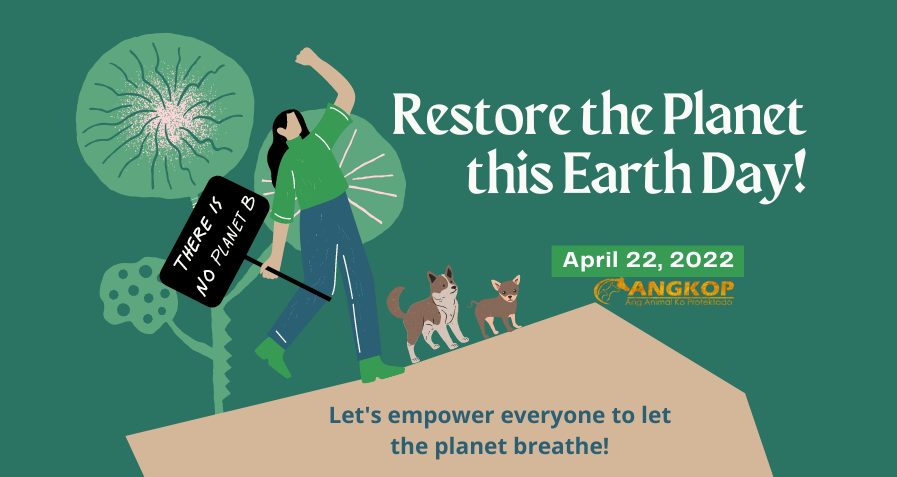
Earth Day 2022 – Let the Planet Breathe!

Earth Day 2022 – Let the Planet Breathe!

For over a hundred years, carbon has been extracted from the Earth’s core, releasing excess carbon dioxide into the atmosphere, instigating climate change. It can be overwhelming not knowing how to help, but we can restore the planet together. Let’s empower everyone to let the planet breathe by removing carbon dioxide from the air.

You may help and conserve the environment by simply performing the following. 
  • delete unwanted emails
  • save electricity
  • save water
  • drive less
  • plant more trees
  • avoid smoking
  • unplug electronics u don’t use
  • use electric fan instead of aircon
  • use LED lights
  • spread awareness to your family and friends.
  • use Ecosia Browser
●Purchasing energy-efficient appliances such as lights, air conditioners, heaters, refrigerators, and washing machines.
●When you are not using something, turn it off. This includes lights, television, video games, and other electrical equipment.
●Don’t burn plastics and don’t cut down too many trees so that we can continue to breathe pure air.
●Delete unnecessary / unwanted emails, why? Deleting emails is the easiest way to reduce your carbon footprint on the computer, what is carbon footprint? Carbon footprint is the total greenhouse gas emissions caused by an individual, event, organization, service, place or product, expressed as carbon dioxide equivalent.


Read More